A search for "vintage nursery prints free" returns tens of millions of results, and the top pages converge on a single program. Browse the Rijksmuseum, the Library of Congress, the Biodiversity Heritage Library, the New York Public Library digital collections. Download the highest-resolution file available. Send it to a print lab. Hang above the crib. The math is clean. A work published before 1929 carries no license fee in the United States. A large-format print costs eight to twenty dollars at a competent lab. The wall above a changing table can be filled for the price of a takeaway dinner, with objects that have survived a century of taste.
Why This Is Actually True
The case for public-domain nursery walls is stronger than critics give it credit for. Institutional scanning programs of the last fifteen years have produced open-access files that a decade ago sat behind paywalls or in physical archives. The Rijksmuseum Studio program made roughly 700,000 objects available at print-ready resolutions and stripped rights language from the download page. The Smithsonian Open Access initiative opened millions of images in 2020. The Biodiversity Heritage Library holds botanical and zoological plates from the 18th and 19th centuries that were originally engraved for scientific accuracy — precisely the register that reads well on a nursery wall.
The catalogues are large enough that a determined parent can find a workable subject at a workable resolution for almost any theme. Botanical plates for a garden-facing bedroom. Audubon-era bird studies for a birdwatcher's child. Ernst Haeckel's radiolarian plates for a room that leans toward pattern rather than representation. Star charts from the Yerkes Observatory era for a ceiling. Nineteenth-century French alphabet primers, Japanese woodblock studies of fish and insects, Persian miniatures held in university libraries. The volume of raw material is genuinely without precedent.
Cost falls out cleanly. A 16 by 20 inch giclée print from a mid-tier online lab runs roughly twelve to eighteen dollars at 2026 prices. A 24 by 36 inch print from the same lab runs twenty-five to forty. Framing adds thirty to eighty at a big-box store, or under twenty if a plain wood moulding is bought unfinished. The all-in for a filled nursery wall — three prints, three frames — lands between one hundred and two hundred dollars. That number is real. Any argument against the approach has to explain what the extra money buys, and the honest answer is: sometimes, not enough.
The catalogues are enormous, the files are free and the labs are competent. The question is not whether it works — it is at what size, in what light, and for how long.
Where It Breaks Down
The failure mode is resolution, and it hides until the file is standing on the wall.
Public-domain files at institutional archives are scanned at heterogeneous specifications. The Rijksmuseum's downloads for its most-viewed works reach roughly 8,000 pixels on the long edge. Its median object sits closer to 2,500 to 4,000 pixels. The Biodiversity Heritage Library serves plates at whatever resolution the contributing library provided, which for older contributions is often 2,000 to 3,000 pixels on the long edge. Google Arts & Culture displays gigapixel-class files on-screen but does not always release them at full resolution for download. Library of Congress prints and photographs vary from 800 pixels (thumbnails misfiled as primary assets) to 15,000-plus (recent Prints & Photographs Division work). The user has no way to filter for print resolution before clicking through each object.
The print math is unforgiving. A commercial print at 300 dots per inch — the standard giclée labs quote — requires the file's long edge in pixels to equal the print's long edge in inches multiplied by three hundred. A 16 by 20 print needs 6,000 pixels on the long edge to hit spec. A 24 by 36 print needs 10,800. A 40 by 60 mural-scale print needs 18,000. A file scanned at 3,000 pixels can be pushed to 16 by 20 at 150 dpi with acceptable results on a matte paper viewed from three feet. It cannot honestly become a 24 by 36 print. Upscaling algorithms are better than they were in 2018, but interpolated pixels do not rescue an image where the original scan lost the ink stipple, the plate wear, the paper tooth. On the wall, at twelve inches, the print looks soft in a way the same file looked sharp on a laptop.
The seven dinosaurs on our own scale chart occupy specific pixel real estate for a reason: at 24 by 36, each animal's silhouette is drawn with linework calibrated to be legible from across a room and still hold up at eight inches. Vector art has no ceiling. A public-domain raster does. This is the point at which the strongest version of the free-print argument stops holding — not at the license, but at the file.
The Rule I Use Instead
We ask three questions before any wall goes up, and public-domain files answer only one of them cleanly.
The first is the wall's largest dimension. If the frame will be under 18 inches on the long edge, most public-domain files clear the resolution bar and the free route wins on cost. If the frame will be over 30 inches on the long edge, roughly nine out of ten public-domain files fail the 300-dpi test, and pushing them regardless produces a print that looks approximately right in photographs and visibly soft in person. We have measured this by hanging the same botanical plate at 16 by 20 and 30 by 40 next to each other; the smaller print reads as an antique object, the larger one reads as a poster of an antique object. That distinction matters more in a small room than it does in a hallway.
The second is the age of the reader. A one-year-old reads a chart from twelve to eighteen inches, close and stationary. A five-year-old reads it from four to eight feet, moving. Public-domain botanical and zoological plates were drawn for the first distance — for a naturalist's desk, an atlas, a museum vitrine. They reward close inspection with detail and lose almost nothing at that range. What they lose at eight feet is contrast. Nineteenth-century inks were fine-grained and mid-toned by intent; a Haeckel plate scanned from a well-preserved copy holds its lines up close and turns into a beige rectangle from across a nursery. Our own alphabet and counting charts are drawn the opposite way: high-contrast letterforms and dot counts that read from the doorway, with secondary detail that rewards the crib-side view.
The third is whether the subject depends on data the file cannot carry. A world map printed from an 1890 lithograph is an antique object about the world in 1890 — Africa's borders are wrong, Antarctica is a rumor. A solar system chart from a 1920 astronomy primer is honest to its own era and wrong to ours: nine planets, no Kuiper Belt, Pluto still comfortably a planet for another eight decades. When the wall is decorative, this is fine. When the wall is a learning surface for a child who will later be graded on the current answer, the free file is not free. It has costs that come due at age seven.
When the Old Rule Still Wins
There is a room where the public-domain approach is clearly correct, and we should say so plainly. When the wall is decorative rather than instructional — a passageway, a landing above a stair, a corner behind a rocking chair — the free file's failure modes stop mattering. Nobody grades an antique botanical plate on whether the taxonomy is current. Nobody reads a 1920 star chart at eight feet expecting to be quizzed on Pluto. The eye receives it as pattern and provenance, which is what the medium is good at.
Two other cases: rooms with strong natural light, where any print will fade in four to seven years regardless of file quality, argue against paying a premium for resolution the sun will eventually eat. And rooms sized for prints under 18 inches — small nurseries, cot-side vignettes, the strip of wall between two windows — sit inside the resolution envelope of most institutional scans. There, the free route is not a compromise. It is the right answer, and any studio that says otherwise is selling something.
From the collection
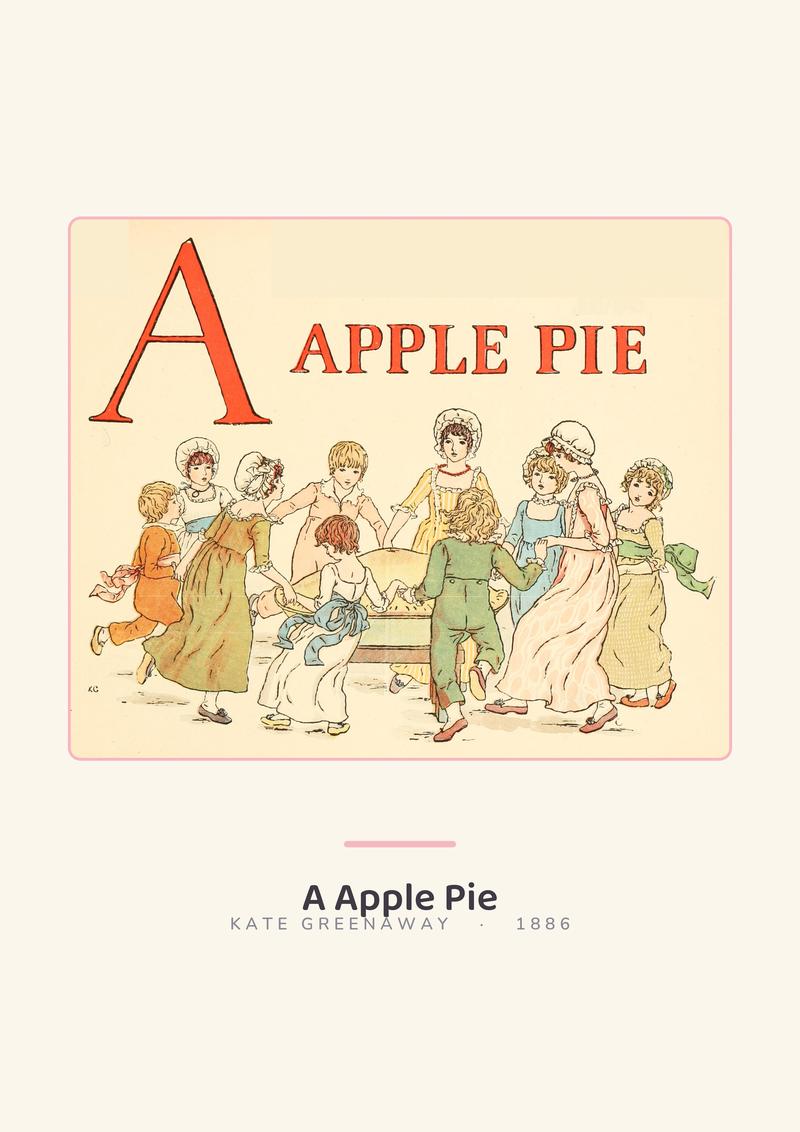
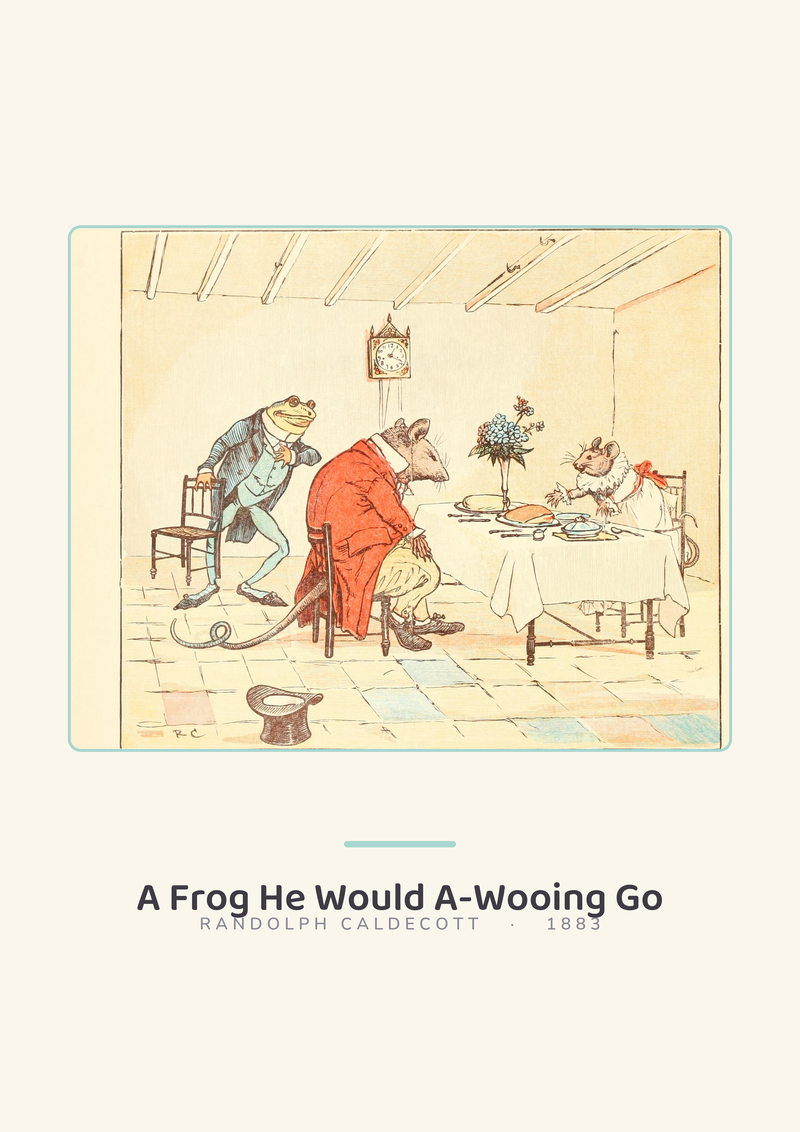
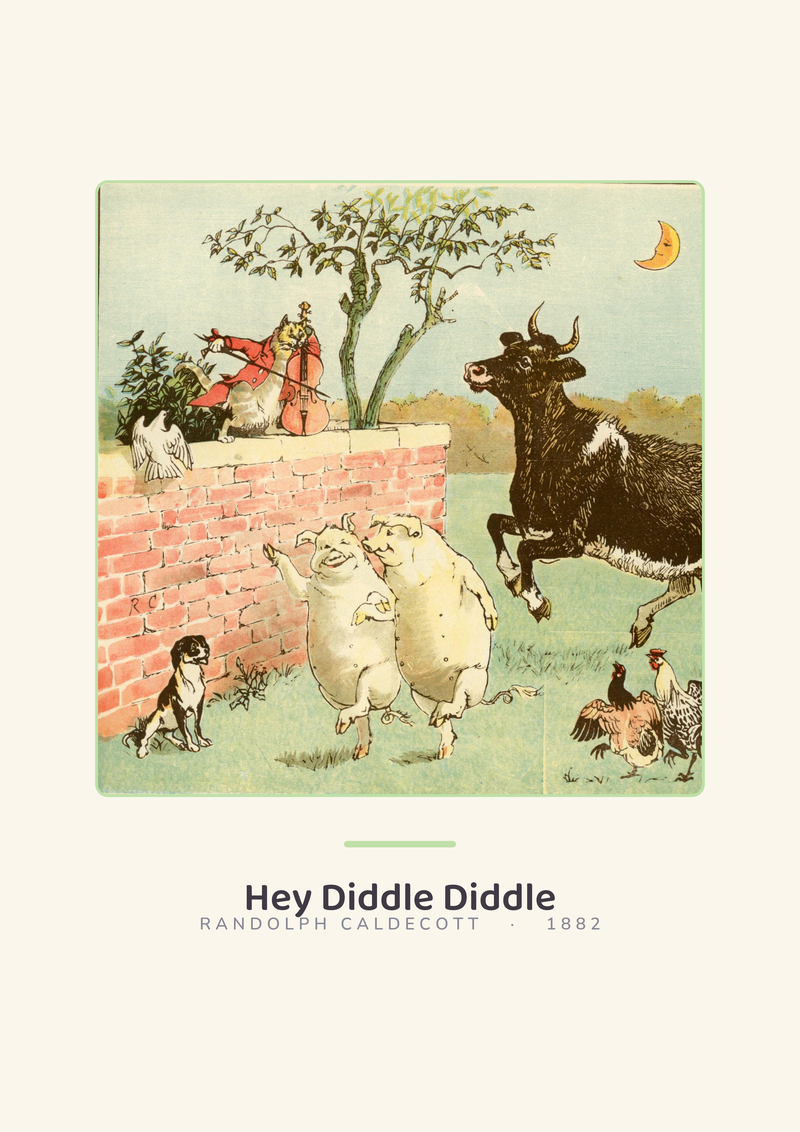
New nursery prints and 10% off your first order.
One email now with your code. No noise after.